
Free Mesothelioma Information Packet

Archive for April, 2007

Shipyard Widow Awarded $5.5 M in Asbestos Case

Thursday, April 12th, 2007

On April 11th, the widow of a former shipyard worker was awarded $5.5 million by a Newport News (VA) circuit court.

Kay Oney, whose husband Vaughn worked for Newport News Shipbuilding for 31 years, says she watched her husband “struggle with cancer for two years” from the time of his diagnosis in 2004 until his death from mesothelioma in November 2006.

According to an article in the Daily Press, the jury trial began in late March and culminated with 2 days of deliberations this week. The seven-member jury decided that Kay Oney was entitled to $9.25 million from two suppliers to the shipbuilding industry – John Crane Inc. and Garlock Sealing Technologies.

It was determined that Crane would be responsible for 60% of that total, or $5.5 million. Garlock would be responsible for the remainder, but because Oney had already settled with Garlock out of court for an undisclosed amount, the jury actually only determined the damages against John Crane Inc.

Oney was pleased with the settlement but is hard-pressed to forget the horrible suffering that asbestos caused her husband, especially in the last several weeks of his life.

“It was some of the worst suffering that I ever listened to,” said Robert Hatten, a Newport News attorney who handled the case for the firm of Patten, Wornom, Hatten and Diamonstein, speaking about a nurse’s testimony at the trial.

“He needed an incredible amount of narcotics to endure the pain every day,” Hatten continued. “It was intractable pain – pain so high that narcotics can’t control it. The last six weeks of his life, he was in horrific condition.”

Hatten notes that the Peninsula Region of Virginia (Newport News, Norfolk, VA Beach) has an unusually high incidence of mesothelioma because so many residents of the area once worked in the shipyards.

“The asbestos industry knew that asbestos fibers could kill you,” Hatten said. “They knew how to prevent it, they knew how to test for it, they knew how to educate and they knew how to warn, but that was not in their financial interest.”

Firefighters Exposed to Asbestos?

Wednesday, April 11th, 2007

A Pennsylvania state representative believes that dozens of firefighters may have been exposed to asbestos during training exercises at a dilapidated shopping center in Levittown/Tullytown, a suburb of Philadelphia.

John T. Galloway told the Bucks County Courier Times that firefighters trained at the now defunct Levittown Town Center about four years ago, just about the same time that the EPA reported asbestos violations to the owner of the center, DLC Management Corporation.

An angry Galloway told DLC Management that they should offer “immediate health examinations” to firefighters who may have been exposed to the asbestos at the site of the former Levittown Shopping Center. In his letter, Galloway told developer Stephen Ifshin that he should “pay all medical costs” if the firefighters were exposed to asbestos at the partly-demolished center.

The newspaper noted that the training exercise, which was attended by several Bucks County fire companies, included drills that required firefighters to cut through the center’s roof and fight a blaze inside the building, therefore possibly exposing them to damaged asbestos. The EPA had just completed an inspection that month, fining DLC Management when they found asbestos “strewn throughout the site.” The state, county, and township officials were never informed of the violations.

“I also ask you to explain why you remained silent and allowed this training session to take place, even though you knew that your company was in the process of removing the asbestos from the building,” Galloway wrote to Ifshin. “This is another example of your blatant disregard for members of this community.”

Galloway told the newspaper that the firefighters were doing a service to their communities by taking part in the training, but were “deceived” by Ifshin when they were possibly exposed to cancer-causing asbestos.
The state EPA recently began re-testing the site to determine whether or not any asbestos remains.

Capitol Reassigns Tunnel Workers to Different Duties

Wednesday, April 11th, 2007

The Hill newspaper reports that due to pressure from the Congress and growing concerns about asbestos-related health issues, some Capitol tunnel workers have been reassigned to other duties.

Senator Patty Murray (D-Wash) recently contacted the Architect of the Capitol’s (AoC) office to request that he shield the 10 members of the Tunnel Rats, as they’ve become known, from further exposure to dangerous asbestos materials.

On Monday, April 9th, the AoC contacted Murray’s office saying that, effective the following morning, the workers would no longer be working in the tunnels, Murray spokesman Pete Weissman said.

Still, Murray was critical of the AoC and their overall handling of the asbestos situation in the 5 miles of tunnels that carry steam and chilled water throughout the Capitol complex.

“The Architect’s decision to take action is a welcome one, but does little to excuse the many years of negligence that have cost these workers their health,” Murray said in a press release yesterday. “For far too long these workers were exposed to deadly concentrations of asbestos while the Architect’s Office turned its back on their complaints.”

Murray suggested that the AoC should “remove the tunnel workers until an abatement plan is outlined and medical clearance is received, provide workers with full medical evaluations to determine if they are medically able to wear respirators, ensure work for the crew in areas that will not affect their health, pay, vacation time or other benefits, and teach tunnel workers and contractors proper asbestos handling measures.”

Eve Malecki, the spokesperson for the AoC, said that workers had been medically cleared for years to work in the tunnels. She added, however, that after receiving new medical information on the workers on Monday evening, which indicated that several of the tunnel workers were already affected by asbestos-related disorders, they decided to restrict their access to the tunnel.

John Thayer, head of the tunnel crew, said yesterday that he and his colleagues were locked out of their office, could not retrieve their personal items and were told that if they were seen near the tunnels the Capitol Police would be called because it would be regarded as a security breach.

Thayer was told that the crew would be reassigned to work in the Capitol Power Plant, which he said has asbestos issues of its own.

“They’re putting us back into a place with another asbestos problem,” but taking workers’ respirators away, Thayer said. “The plan is to divvy us up in other shops. The guys are going to lose $600 a month in hazardous-duty pay.”

“We’re not ping-pong balls to play around with our health. We need to be talking about compensation,” Thayer said.

Refinery Worker Sues 43 Companies

Tuesday, April 10th, 2007

A former Texaco refinery worker who has developed lung cancer after prolonged exposure to asbestos is suing his former employer as well as 42 other large corporations he claims were negligent in “failing to adequately test their asbestos-laced products before flooding the market with dangerous goods.”

According to an article in the Southeast Texas Record, Willie Scott, age 71, has filed suit against such companies as A.O. Smith – maker of residential gas and electric water heaters and commercial water heating equipment; aerospace corporation Lockheed-Martin; and Zurn Industries, makers of power and marine boilers, plumbing and heating valves, drains, and other similar products.

Scott, who worked for Texaco for more than 30 years (1952 to 1983), is also suing 3M Corporation and American Optical Company for making faulty masks that he claimed did little to protect him from inhaling dangerous asbestos fibers.

Scott also admits to being a lifelong smoker. Research shows that smokers exposed to asbestos are much more likely to develop mesothelioma – asbestos-caused cancer – than non-smokers. That makes Scott a prime candidate for the disease.

The article notes that Scott is suing for “physical pain and suffering in the past and future, mental anguish in the past and future, lost wages, loss of earning capacity, disfigurement in the past and future, physical impairment in the past and future, and past and future medical expenses.”

Capitol Tunnel Workers Diagnosed with Asbestosis

Tuesday, April 10th, 2007

Four of the ten Capitol tunnel workers who’ve become known as “The Tunnel Rats” have been definitively diagnosed with asbestosis, a scarring of the lungs caused by prolonged exposure to asbestos. Another four workers were diagnosed with “probable” asbestosis.

According to a report by NBC News, the men were diagnosed by an independent asbestos specialist who recently examined all ten of the workers. The diagnosis coincides with the men’s recent pleas to members of Congress to address all the hazards in the Capitol tunnel system.

The plight of the men first came to light when the men “blew the whistle” as to the poor working conditions in the tunnels, which carry chilled water and steam through the Capitol complex. The men had already complained to their managers that ceilings were falling, the tunnels were constantly covered with white dust, and that temperatures often reached in excess of 130 degrees. Many of the deteriorating pipes were covered with asbestos insulation, causing the men to fear for their health.

John Thayer, the tunnel worker’s supervisor, says their complaints were ignored, even though a study by the Architect of the Capitol showed similar wear and tear in the tunnels. Managers told him that they were monitoring and testing to make sure loose asbestos was not getting into the air and that there was no need to wear protective gear because the asbestos was in good condition and fibers were not being released.

Last year, the men filed an official complaint with the Congressional Office and contacted several U.S. Congress members to inform them of the situation. The tunnel workers say their actions resulted in retaliation by the Architect of the Capitol’s office. Recently, John Thayer appeared before Congress to relay his tales of working in the tunnels and to ask for assistance in righting the situation.

Utah Reports No Increase in Meso Near Mines

Monday, April 9th, 2007

150 Workers Sue for Asbestos ExposureA study conducted by the Utah Department of Health indicates that there is no increased evidence of cases of asbestos-caused mesothelioma among those who lived in the vicinity of two former vermiculite mines in Salt Lake City.

The study, according to the Deseret News, reflected those living within a two-mile radius of the former mines, which processed vermiculite that came from Libby, Montana, where hundreds have been sickened from an asbestos-contaminated form of the material. The study did not specifically target employees who worked at either Vermiculite Intermountain or Intermountain Products Incorporated, both in Salt Lake City.

Utah is just one of several states that is examining the relationship between cancer statistics and vermiculite mines. With help from the Agency for Toxic Substances and Disease Registry, state health departments nationwide have been looking at cancer rates near facilities that processed asbestos-contaminated vermiculite.

What the study did find in Utah, however, was a significantly increased rate of lung and respiratory cancers, though the Department of Health refuses to link these cases to the vermiculite mines.

When an environmental agent is the cause, said Department of Health toxicologist Wayne Ball, trends can be spotted. There was no upward or downward trend on respiratory cancer rates over the 28-year time period studied, from 1973-2000. “It was elevated, but consistent. We don’t know what was happening, but because mesothelioma was not increased, we don’t feel these facilities contributed to lung cancer rates in the area,” he said.

The state’s study, Ball noted, had limitations. “Health officials have no exposure data to know if asbestos was ever released as the vermiculite was processed. They don’t know who worked at the plant at the time and so have been unable to track workers — who would have had the highest exposure — to see whether they suffered harm from asbestos exposure.”

As for the lung cancers, they know that about 85 percent of cases are caused by smoking, Ball said, but researchers had no information on the smoking rates in that area and whether that could account for the elevated rate.

Ball says the current site, which now houses a power plant, offices, and a commercial parking lot, poses no hazard for those in the vicinity. He notes that the EPA finished clean-up of the site in late 2004. Health department officials, however, are now searching for former employees of the mines to warn them of the risks of direct asbestos exposure.

Utah Reports No Increase in Meso Near Mines

Monday, April 9th, 2007

A study conducted by the Utah Department of Health indicates that there is no increased evidence of cases of asbestos-caused mesothelioma among those who lived in the vicinity of two former vermiculite mines in Salt Lake City.

The study, according to the Deseret News, reflected those living within a two-mile radius of the former mines, which processed vermiculite that came from Libby, Montana, where hundreds have been sickened from an asbestos-contaminated form of the material. The study did not specifically target employees who worked at either Vermiculite Intermountain or Intermountain Products Incorporated, both in Salt Lake City.

Utah is just one of several states that is examining the relationship between cancer statistics and vermiculite mines. With help from the Agency for Toxic Substances and Disease Registry, state health departments nationwide have been looking at cancer rates near facilities that processed asbestos-contaminated vermiculite.

What the study did find in Utah, however, was a significantly increased rate of lung and respiratory cancers, though the Department of Health refuses to link these cases to the vermiculite mines.

When an environmental agent is the cause, said Department of Health toxicologist Wayne Ball, trends can be spotted. There was no upward or downward trend on respiratory cancer rates over the 28-year time period studied, from 1973-2000. “It was elevated, but consistent. We don’t know what was happening, but because mesothelioma was not increased, we don’t feel these facilities contributed to lung cancer rates in the area,” he said.

The state’s study, Ball noted, had limitations. “Health officials have no exposure data to know if asbestos was ever released as the vermiculite was processed. They don’t know who worked at the plant at the time and so have been unable to track workers — who would have had the highest exposure — to see whether they suffered harm from asbestos exposure.”

As for the lung cancers, they know that about 85 percent of cases are caused by smoking, Ball said, but researchers had no information on the smoking rates in that area and whether that could account for the elevated rate.

Ball says the current site, which now houses a power plant, offices, and a commercial parking lot, poses no hazard for those in the vicinity. He notes that the EPA finished clean-up of the site in late 2004. Health department officials, however, are now searching for former employees of the mines to warn them of the risks of direct asbestos exposure.

Town Finds Out About Asbestos Threat Five Years after Fact

Saturday, April 7th, 2007

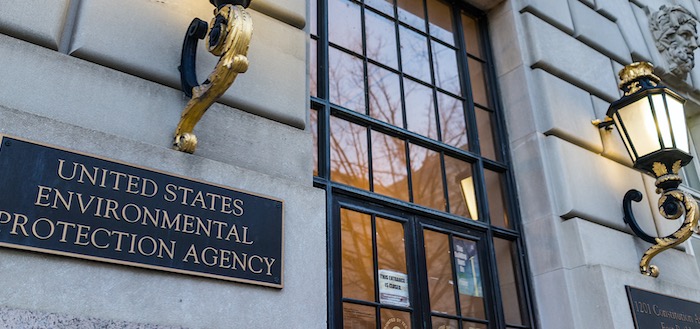
A suburban Philadelphia township that’s home to a long-defunct shopping center, has just learned that the state Environmental Protection Agency (EPA) fined the center’s owner five years ago for rampant asbestos violations.

According to an article in the Bucks County Courier Times, in April and May 2002 a federal inspector visited the demolition site of the Levittown Shopping Center and saw asbestos-containing material “strewn on the ground throughout the shopping center, piled in open Dumpsters, and left hanging from building ceilings and walls.” The EPA inspector later issued a fine in the amount of $34,700 against the owner, developer, and contractor but the township or county was never informed about the violations.

Neither were the neighbors who live, work, and play near the shopping center, notes the article, which include a Catholic church and elementary school and a publicly-funded senior citizen home. Furthermore, no tests were done to see if the cancer-causing material had impacted the air, soil or water at the site, according to Donna Heron, an EPA spokeswoman.

A local state representative, John T. Galloway, recently learned about the violations and fines while searching for state grants that might be available to assist the township in finally completing renovations of the shopping center, which has sat in disarray for years.

The EPA told Galloway that the owner was not required to notify the town or county of the violations.

“I want to know exactly what happened,” he said. “I want to know who knew, when did they know and what the ramifications are. We don’t know what the ramifications have been because no one was told,” Galloway told the newspaper.

Executive Director of the local Clean Air Council, Joe Minott, also believes that the EPA had a duty to inform local residents about the health risks involved with inhaling asbestos fibers, especially given the proximity of the shopping center to the school. So does newly-elected State Representative Patrick Murphy.

“To me it’s an outrage that they wouldn’t even contact [Tullytown] officials,” Murphy said. “I believe in an open and responsive government. That’s how I run my office and I would expect and demand the EPA and other federal agencies to do the same.”

DLC Management Corporation, the developer of the new Levittown Town Center and the company who paid about two-thirds of the fine, issued this statement earlier this week. “DLC is committed to complying with all applicable federal, state and local laws, and DLC will continue to take all steps necessary to ensure that future construction activities and operations at the Levittown Shopping Center comply with all applicable legal requirements,” the statement read.

Former Rail and Steel Worker Wins Asbestos Suit

Saturday, April 7th, 2007

A man who worked for British Rail for seven years and now suffers from mesothelioma has received a settlement of £128,500 from the rail company and another former employer, Swindon Pressings.

Frederick Allen, age 70, was employed by the railroad from 1954-1961 and worked in what Brits know as the infamous Seven Shop, where lethal blue asbestos was sprayed on the coaches. According to a report in the Wiltshire Gazette & Herald, part of his job was also to fix brackets at the top of coach frames and work near pipe fitters who were lagging pipes with asbestos. In addition, Allen worked in the Fifteen Shop, where he plated bending metal and where other employees worked with asbestos on nearby welding.

The report also noted that Allen worked near steam pipes that were covered in asbestos lagging which often burst or leaked, necessitating the removal of the asbestos lagging without means of protection.
From 1961 until 1998, Allen worked for Pressed Steel Company, including several years in their C Building, in which there were heating pipes and a boiler lagged with asbestos.

“Large bags of asbestos were kept in the stores of this building which were distributed by employees using their bare hands,” said solicitor Brigette Chandler. “Asbestos was used in clutches and brakes and Mr. Allen was exposed to asbestos every time he turned over a press.”

From 1972 to 1998, Mr. Allen worked also worked as an engineer, which again took him onto the shop floor where he was exposed to asbestos.

“Mr. Allen and his brother, who also worked for the factory, used to meet each day for lunch,” added Miss Chandler. “They used to sit on a bench and eat sandwiches in an area where asbestos dust was lying around.”

Iron Ore Miners Dying of Mesothelioma

Friday, April 6th, 2007

An article in the Minneapolis Star Tribune cites a report by the Minnesota Health Department stating that more than 50 employees of the state’s iron ore mines have died of mesothelioma since 1988 and hundreds of others have been sickened by asbestos-related diseases.

The report led the Minnesota Health Department to conclude that the rare cancer is killing iron ore miners in significantly greater numbers than previously thought. The department has announced that it will “study whether the deaths are linked to asbestos or asbestos-like fibers in iron ore dust, and whether exposure limits are needed.” A 2003 study, faulted by mine workers and others, had concluded that the cause was probably commercial asbestos used in taconite-plant furnaces and other mining equipment.

The men who have worked in the iron ore mines say they live in fear of being diagnosed with the next case of mesothelioma. “Hopefully it never blossoms,” Karl Oberstar Jr., 55, said of his asbestosis, which was detected in a screening arranged by his union in the late 1990s. He worked 31 years as a millwright and mechanic for LTV Steel Mining Co. in Hoyt Lakes, the newspaper says.

Oberstar remembers dumping bags of dusty asbestos into “a big mixing bowl” while making a fire-resistant paste to seal furnaces. “You could just see the particles everywhere,” he said. “The air never seemed clear.”

Susan Kepler, widow of Lee Kepler who died of mesothelioma in 2004, remembers him being covered with dust and dirt every day. “He came home covered with it,” she said. “He’d blow his nose, and this gray, crummy-looking stuff would come out. He complained to the company at one point, and they finally gave them some respirators, but they clogged up right away. The company told him it was just harmless dust.”