
Mesothelioma and Asbestos Awareness Center

The First Stop After a Mesothelioma Diagnosis

Archive for October, 2008

Illinois Central Railroad Company Sued By Son Of Former Employee

Thursday, October 30th, 2008

The Illinois Central Railroad Company is being sued by Donald Hamilton, son of the late Raymond Hamilton. Mr. Hamilton’s lawsuit claims that his late father’s asbestosis was caused by asbestos exposure while working for the company.

The late Mr. Hamilton likely inhaled dangerous asbestos fibers and other carcinogenic materials while he was employed with the railroad company, which ultimately led to his diagnosis of asbestosis, a lung disease that is conclusively linked to previous asbestos exposure.

Raymond Hamilton died from the disease on November 9, 2005.

Mr. Hamilton further claims that his father experienced considerable physical pain while he was alive, as well as mental anguish and anxiety stemming from his disease.

Son Files Asbestos Lawsuit A Year After His Father’s Death

Thursday, October 30th, 2008

An Illinois man has filed an asbestos-related lawsuit on behalf his late father. James Gillis’ suit states that his father, the late Gilbert Gillis, was diagnosed with mesothelioma that was wrongfully caused by 69 defendant corporations that failed to properly protect the late Mr. Gillis from the consequences of asbestos exposure.

James Gillis stated that his father was diagnosed with mesothelioma on February 19, 2003 and died after a long battle with the disease on October 24, 2007. The late Mr. Gillis survived much longer than the majority of mesothelioma sufferers, who generally lose their battle with this type of cancer in less than 2 years following diagnosis.

Gilbert Gillis was once employed as a laborer and furnace operator at various Illinois sites between 1953 and 1998 and may have been exposed to asbestos-containing products at any of these locations.

The eleven count lawsuit was filed on October 22nd in Madison County Court. James Gillis is seeking in upwards of $350,000, including $200,000 in compensatory damages and punitive damages in an amount suitable for punishing the defendant corporations involved.

Kentucky Widow Sues 149 Corporations On Behalf Of Her Late Husband

Thursday, October 30th, 2008

Eloise Heep of Kentucky has filed a lawsuit in Madison County Court on behalf of her late husband. The suit claims that Zelba Leon Heep’s diagnosis and subsequent death from mesothelioma cancer was wrongfully cause by 149 corporations, including Mr. Heep’s former employers.

Mrs. Heep’s suit alleges that her husband was exposed to asbestos-containing materials while employed with the United States Navy from 1961 to 1963 and then as a boilermaker from 1968 to 2006. The suit states that the health consequences of asbestos exposure should have been foreseeable by Mr. Heep’s employers, and that these individuals failed to properly protect Mr. Heep from exposure to this harmful toxin.

The eleven-count lawsuit states that Mrs. Heep has suffered great emotional pain as a result of her husband’s death, and she is seeking amounts in upwards of $200,000 including $150,000 in economic damages and $150,000 in compensatory damages. The lawsuit was filed on October 22nd.

Zelba Leon Heep was diagnosed with mesothelioma cancer in November of 2007 and passed away only a few short months later on January 10, 2008.

Mulch May Contain Asbestos, According To KY Division For Air Quality

Wednesday, October 29th, 2008

Mulch composed of ground-up demolition debris from the former Independent Tobacco Warehouse in Horse Cave, Kentucky may contain asbestos, according to a report released by the state Department for Environmental Protection.

According to the Division for Air Quality, all asbestos removal and subsequent demolition must be reported prior to occurring, but DAQ is now claiming that they were never informed of demo plans at the Independent Tobacco Warehouse and therefore no air quality samples or other asbestos testing occurred there prior to beginning demolition.

An Environmental Education Specialist at the DAQ stated that “health risks to those who picked up the material are considered to be minimal,” but all individuals who came into contact with the asbestos-containing mulch should arrange for removal by a professional abatement company to avoid further exposure.

Fines will be issued eventually to the company that handled demolition for failing to notify the proper environmental authorities before beginning the project.

Update: Asbestos Will Not Be Added To “Watch List” Of Harmful Chemicals

Tuesday, October 28th, 2008

After meetings in Rome this week, the United Nations will not be adding chrysotile asbestos to their “watch list” of harmful chemicals, according to Rotterdam Convention officials. The discussion of whether or not to add asbestos to the list will not be picked up again for at least two more years.

Canadian officials were perhaps the most outspoken at the convention and vehemently opposed the addition of chrysotile asbestos to the list, as their country exports roughly $80 million in asbestos on a yearly basis.

Other countries, including Zimbabwe, were also at the convention to oppose the addition, as they also mine and export asbestos. One convention attendee said that “the jig is up” for asbestos exporters, and expects the Canadian Prime Minister to “take action” in an effort to avoid public outcry.

Here in the United States, asbestos is not banned, but there are asbestos usage regulations. Some countries, including South Africa, have recently placed a ban on the material and will prosecute those who export or use asbestos.

Researchers Continue To Test Effects Of Chemo On Mesothelioma Patients

Tuesday, October 28th, 2008

Researchers in Britain recently conducted a study of the impact of chemotherapy on patients suffering from malignant pleural mesothelioma, a deadly cancer caused by asbestos exposure. The findings of the study, which were published in the Lancet, a 185-year old British journal of medicine, stated that chemotherapy, along with other traditional cancer treatments, such as radiation, are generally only a means of symptom control in mesothelioma patients, as there is no known cure for this particular disease.

The study was initiated when researchers could not reach a consensus regarding the use of chemotherapy in mesothelioma patients. 409 participants, all suffering from malignant pleural mesothelioma cancer, were assigned to either a chemotherapy-plus-”active control treatments” regimen (chemo paired with steroids or analgesic medications) or a regimen of only active control treatments without chemotherapy.

Researchers met with the participants every 3-to-21 weeks and evaluated their progress. When compared, the group who received chemotherapy and active control treatments experienced what the researchers called “a small, non-significant survival benefit.” Quality of life was reportedly not affected when researchers followed up with both groups of participants.

The study concludes that, when malignant pleural mesothelioma patients receive chemotherapy in conjunction with other treatments, there is really no measurable benefit as far as survival rates or quality of life are concerned. One positive finding, however, relates to the use of the chemo drug Vinorelbine, which was shown to slightly increase survival rates when paired with other treatment methods. Researchers are now pursuing further study of this particular drug.

November Is National Lung Cancer Awareness Month

Tuesday, October 28th, 2008

The Lung Cancer Alliance, as well as many other cancer-awareness organizations, have announced that November will be Lung Cancer Awareness Month. During the month of November, Americans are encouraged to do their part to increase awareness of lung-related cancers, including mesothelioma, a fatal cancer that affects thousands each year and is perhaps one of the most painful and difficult-to-treat cancers.

Lung-related cancers are not just caused by smoking cigarettes, as many Americans still believe. Lung-related cancers reportedly kill more individuals on a yearly basis than breast, pancreas, colon and prostate cancers combined. In women, lung-related cancers kill almost as many as breast cancer each year, and the rates of mesothelioma cancer are actually increasing in American women due to second-hand asbestos exposure.

Mesothelioma is caused by previous exposure to asbestos, and individuals who work in certain professions, including firefighters, home inspectors, construction workers, and veterans are considered to be at a heightened risk of developing mesothelioma. During the month of November, those individuals who are especially susceptible to the eventual onset of mesothelioma or other lung-related cancers should speak with their doctor and undergo respiratory testing to determine whether or not they are in jeopardy of developing these diseases.

The Lung Cancer Alliance has provided information for individuals who wish to partake in Lung Cancer Awareness Month initiatives, such as emailing members of Congress to request increased funding for cancer research and hosting fundraising events. For further information, please visit www.lungcanceralliance.org.

Mayor In Milford, NJ May Finally See Asbestos Cleanup At Paper Mill Site

Monday, October 27th, 2008

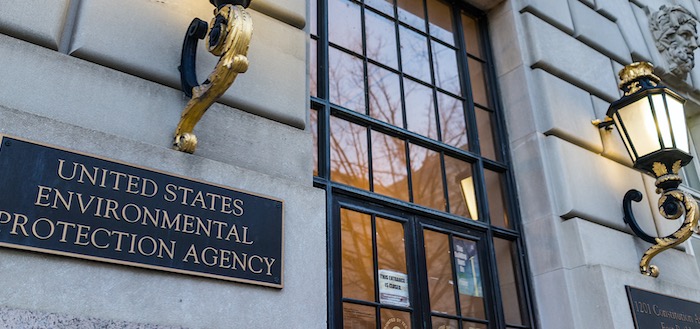
The mayor of Milford, New Jersey is calling for the immediate cleanup of the Milford Paper Mill, and now the Environmental Protection Agency is proposing the mill be added to the list of Superfund sites, which would subsequently provide funds for the cleanup.

The paper mill site contains asbestos, as well as other dangerous chemicals, andat both the mayor and EPA fear that residents may be at risk of exposure.

Mayor Gallos has been waiting to see the cleanup take place for a considerable amount of time and has “little faith” that the owners of the paper mill site will carry out asbestos abatement and removal on their own accord.

Don Pursell, Councilman for the Borough Council, has stated that the owner’s have, for many years, hid the fact that the site was severely contaminated.

The Environmental Protection Agency is asking for resident’s views regarding the addition of the site to the Superfund list from now until November 4th. Residents have voiced concerns over the consequences of asbestos exposure, including the development of asbestosis and mesothelioma cancer.

Libby Residents Will Finally Get Their Day In Court

Monday, October 27th, 2008

For nearly three years various courts all the way up to the Supreme Court have heard pre-trial motions relating to the Libby, Montana asbestos case involving W.R. Grace Co. Hundreds of former W. R. Grace workers and residents have been exposed to asbestos, and finally, after a long wait on the part of the plaintiffs, a federal judge has set a trial date for the United States’ “largest environmental criminal trial ever.”

District Judge Donald Molloy announced on Friday in front of a full courtroom that the jury selection for the trial will commence on February 19, 2009. It is estimated that the case could take as many as four months before a judgment is made.

Prosecution in the case is alleging that W.R. Grace, along with a number of both past and present executives of the company, put the lives of thousands of residents and workers in danger due to the mining of ore in a nearby vermiculite mine that was tainted with dangerous asbestos.
Judge Molloy has ruled against Grace a number of times, which led to the company’s appeal to the Supreme Court, which was subsequently denied.

It is thought that Grace will attempt to prove that the asbestos-tainted ore is not dangerous, but prosecution is ready to show that hundreds of individuals have in fact died from mesothelioma cancer, which developed as a result of their asbestos exposure.

In the event that Grace and executives are found guilty they could face maximum prison sentences of anywhere between 55 to 70 years.

126 Nations Meet To Discuss Asbestos In Rome This Week

Monday, October 27th, 2008

This week, 126 nations, including Canada and Iran, will meet in Rome, Italy to discuss the addition of chrysotile asbestos to a list of harmful and potentially deadly chemicals. According to Canadian officials, their nation exports 95% of the chrysotile asbestos that is mined there, and it is therefore no surprise to know that Canada opposes the addition of asbestos to the harmful chemicals “watch list.”

Critics from Canada and other nations call their opposition “self-serving.”

Canada exports perhaps the largest percentage of asbestos to India, where it is mixed with other chemicals and used as piping insulation. A series of investigative news articles published by the Ottawa Citizen newspaper recently is tracking the exported asbestos and taking a further look at how the continued export of this deadly toxin has world-wide effects.

The center of Canada’s chrysotile mining industry is located in Quebec, where about 1,000 people work. Although Canada still profits from this industry, other nations such as Zimbabwe and Russia are mining asbestos at a lower cost, which has cut Canada’s profit somewhat. However, Canada reportedly exported $77 million in chrysotile asbestos in 2007 (43% arriving in India).

The Canadian government maintains their position on adding asbestos to the “watch list,” despite acknowledging the deadly health consequences of asbestos exposure, including development of mesothelioma cancer. Canadian residents who wish to contact the Chrysotile Institute can do so by visiting their website, http://www.chrysotile.com/en/index.aspx.

FREE Book and Information Packet


RSS Feed

Related Topics:

News
Read more news articles.