
Mesothelioma and Asbestos Awareness Center

Archive for April, 2008

Toledo Company Fined for Asbestos Violations

Tuesday, April 15th, 2008

A Toledo, Ohio asbestos removal company has been fined more than $12,000 for the mishandling of hazardous asbestos and for failing to follow procedures for which they were trained and licensed to perform.

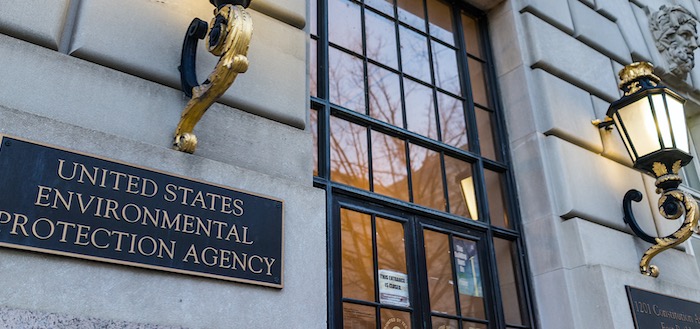
According to an article in The Plain Dealer, the Ohio Environmental Protection Agency (EPA) claims that Total Environmental Services did not comply with Ohio’s asbestos emission control standards during a job for which they were contracted in 2006.

“The company failed to adequately wet asbestos-containing material that had been stripped from Gourley Hall at Ohio State University’s Agricultural Research and Development Center in Wooster. The company also neglected to wet the asbestos-containing waste while collecting and bagging it for disposal,” EPA said in a news release.

EPA inspectors discovered the violations when they visited the university during the renovations, which took place in February 2006. They immediately spied bags full of dried, crumbling asbestos, which should have been wetted down before removal. The EPA does acknowledge, however, that workers for Total Environmental Services did attempt to correct the problem immediately by wetting the bags.

Wet asbestos does not present a health hazard. However, dry, crumbling asbestos – known as “friable” asbestos – can break up into small fibers and can become airborne. At that point, the fibers can be inhaled by those in the vicinity. Exposure to the toxic fibers is known to cause various pulmonary diseases, including asbestos and mesothelioma, an asbestos cancer.

Asbestos-Containing Toy Prompts Lawsuit

Monday, April 14th, 2008

California-based Asbestos Disease Awareness Organization (ADAO) is suing CBS Corporation, a toy maker, and several retailers in regards to the sale of a toy based on a popular CBS show. The toy, the organization says, contained trace amounts of asbestos.

According to a Reuters article, the ADAO says that the toy, a crime-scene kit based on the series “CSI: Crime Scene Investigation,” contained asbestos in a powder used to dust for fingerprints.

The manufacturer of the kits, Planet Toys Inc., removed them from the market last year because of pressure from the group but insists that multiple tests have shown no asbestos in the toy.

The lawsuit, filed in Los Angeles Superior Court, said tests showed that the kits’ fingerprint powder contained “substantial quantities of tremolite asbestos,” which it described as “one of the most lethal forms of asbestos.” Asbestos has been deemed a known human carcinogen by the U.S. Department of Health and Human Services. Exposure to the toxic mineral has been known to cause mesothelioma, an asbestos cancer that attacks the lining of the lungs.

ADAO wants Planet Toys to halt all sales of the toys unless they carry a hazardous material warning. In addition, the asbestos group believes the company should issue full refunds on any returned kits.

On its website, Planet Toys announced that it had issued a “stop sale” on all CSI fingerprint kits “until further information can be ascertained as to the discrepancy between our respective test findings.” Planet Toys has not commented on the lawsuit.

Study Touts Potential New Asbestos Drug

Friday, April 11th, 2008

A drug that can help protect those who have been exposed to asbestos has resulted from a study, published in Science Magazine, which - for the first time - explains how asbestos fibers lead to the chronic lung inflammation that causes asbestosis and mesothelioma cancer.

The study was conducted by Prof. JĂĽrg Tschopp of the University of Lausanne and colleagues in Europe and the United States, notes an article in the British newspaper The Telegraph. In the study, Tschopp and others report that the inflammation caused by asbestos fibers that are lodged in the lungs are linked to a complex of proteins, known as the Nalp3 inflammasome. This protein complex is also involved in other inflammatory diseases such as gout, which can be treated with a drug called Anakinra, the study notes.

The team of researchers now believes that the same drug might possibly be used to fight the inflammatory affects of asbestos fibers and potentially slow the symptoms of asbestosis and mesothelioma.

“Because exposure to asbestos increases not only the risk of asbestosis, but also lung cancer, mesothelioma, and other incurable cancers, this suggested new treatment is highly desirable,” says Prof. Tschopp.

He said that use of Anakinra would be used for prevention and not a cure. “Rather persons exposed to asbestos in the past and thus at high risk to get asbestosis or lung cancer could be treated with an inhibitor drug.”

Given the success of treating gout this way, “we are therefore quite optimistic that the same treatment will work for asbestosis,” Tschopp added.

Dr. Joanna Owens, Cancer Research UK senior scientific officer, said: “This important laboratory research brings us a step closer to understanding how asbestos causes the chronic inflammation that can lead to cancer.

“These results should help scientists find better ways to treat people who have been exposed to asbestos in the past. But Anakinra will need thorough testing in clinical trials before we’ll know if it’s safe and effective at preventing asbestos-related cancers.”

Widow of Refinery Worker Sues Oil Companies

Thursday, April 10th, 2008

The widow of a Texas refinery worker who developed malignant mesothelioma while performing job-related duties is going after two large oil companies in a lawsuit recently filed in a Jefferson County district court.

According to an account of the lawsuit outlined in the Southeast Texas Record, Gloria English is suing Texaco and Chevron USA for “maliciously” exposing William English, her husband, to asbestos. The suit was filed on April 8.

According to the plaintiff’s petition, Mr. English was employed at Texaco’s Port Arthur, Texas facility. During his employment in the labor and maintenance departments, he “used and was exposed to toxic materials including asbestos dust and fibers.”

“As a result of such exposure, William English, developed an asbestos-related disease for which he died a painful and terrible death on July 8, 2007,” the suit states.

“The Defendants knew for decades that asbestos-containing products could cause the disease of asbestosis and asbestos-related cancers and still allowed their employees …to work with and around asbestos products. The Defendants acted with malice…”

The suit also alleges that the two mega oil companies failed to warn employees of the dangers of asbestos in a timely manner or to “take the necessary engineering, safety, industrial hygiene and medical precautions.”

“As a result of the aforementioned malice and/or gross neglect of the Defendants, Plaintiffs seek claims for all elements of damages allowable under the law including exemplary damages and seek to recover from the Defendants, an amount in excess of the jurisdictional limits of this Court,” the suit says.

Libby Medical Program to Continue

Wednesday, April 9th, 2008

Yesterday, officials for W.R. Grace and Company announced that it plans to retain the medical program it established in 2000 to assist local residents with medical needs resulting from their exposure to asbestos from the former Grace mine located near the small Montana town of Libby, where several hundred individuals have already died from asbestos diseases such as malignant mesothelioma.

According to a story aired on KECI-TV Missoula, Grace’s vice president William Corcoran made the announcement in order to clear up some misunderstandings about the medical program and its continuation. Several local media reports insinuated that the program would stop once Grace emerged from Chapter 11 bankruptcy. Corcoran wanted to make it clear to asbestos and mesothelioma victims and their families that the program would continue after the bankruptcy just as it had while the company was in bankruptcy.

The Libby Medical Program currently enrolls more than 800 people, all of whom receive health care and prescription drug coverage. Since its inception in 2000, Grace has spent more than $14 million on the program.

In addition, Grace makes an annual contribution of $250,000 to St. John’s Lutheran Hospital in Libby. To date, the hospital has received about $2 million to support its research of the disease. The money also helps support mesothelioma treatment programs, including clinical trials of new drugs and therapies.

Boilermaker Sues Twice for Asbestos Diseases

Tuesday, April 8th, 2008

A family of a Texas man who worked as a boilermaker and general laborer has filed an asbestos-related lawsuit - the second such suit filed by the man and/or his family.

According to an article in the Southeast Texas Record, W.Z. Hutson filed his first claim several years ago, after developing an asbestos-related disease. Now, Hutson’s family is seeking compensation for a “different malignant asbestos-related injury,” which allegedly prematurely ended his life.

The suit was filed on April 3 against A.O. Smith Corporation and 67 other defendants. According to the plaintiff’s petition, the A.O. Smith Corp., along with the other companies named in the suit, “knowingly and maliciously manufactured and distributed asbestos-containing products throughout Jefferson County.” Their negligence resulted in Hutson developing malignant mesothelioma, an asbestos cancer for which there is no cure.

Some of the other defendants listed in the suit include aerospace giant Lockheed Martin and iron supplier Zurn Industries.

The suit alleges the defendants in the lawsuit were negligent for “failing to adequately test their asbestos-laced products before flooding the market with dangerous goods and for failing to warn the consumer of the dangers of asbestos exposure.”

In addition, the claim states that Minnesota Mining and Manufacturing Corp. (3M Corporation) and American Optical Corp. are at fault for producing defective masks that failed to provide respiratory protection.

In the precedent-setting Pustejovsky vs. Rapid-American Corp. decision made in 2000, the Texas Supreme Court held that a victim of asbestos may later file a second lawsuit for an asbestos cancer if he develops the cancer at a future date, even though he/she has already sued and received compensation.

“The opinion overruled a long history of Texas cases holding that a person may only bring one lawsuit for an asbestos-related injury, even if he develops a second, catastrophic asbestos-related cancer at a much later date,” the article points out.

WR Grace Reaches $3 Billion Deal in Asbestos Suit

Monday, April 7th, 2008

An announcement made earlier today outlines a $3 billion agreement made with W.R. Grace and Company to resolve current and future asbestos claims with the chemical manufacturer and related entities, which will eventually allow the multinational corporation to emerge from bankruptcy with no further obligations for asbestos injury liability.

According to a press release, the announcement of the settlement was made at a scheduled bankruptcy hearing before Judge Judith Fitzgerald in Pittsburgh this morning. It is expected that Judge Fitzgerald will set the matter for an additional hearing later this month.

The agreement calls for the company to pay $250 million in cash, as well as deferred payments of $110 million per year for five years beginning in 2019 and $100 million per year for ten years beginning in 2024.

“Terms of the agreement will require Grace to make cash payments over a period of time into a trust fund for asbestos victims. Additional cash contributions will be paid to the trust by Sealed Air Corporation, and Fresenius Medical Corporation, both formerly affiliated with Grace,” the settlement states. In addition, Grace had to agree that all of its remaining insurance coverage would be used for the benefit of the asbestos victims and agreed that the trust fund shall receive warrants for its stock shares at an agreed price. The total value of the payments and equity is approximately $3 billion dollars.

“The victims of asbestos poisoning and asbestos cancer have walked a long path to reach justice. Certainly nothing can replace the family members who have been lost as a result of their exposure to asbestos, but today’s settlement represents a fair resolution for both the victims and Grace,” said John D. Cooney of the Chicago law firm of Cooney and Conway. “It is appropriate at this time to remember that countless lives were lost and families damaged because of the needless use of asbestos products for many decades.”

At the time it declared bankruptcy in April 2001, W.R. Grace was faced with approximately 325,000 asbestos-related lawsuits. With the establishment of the trust fund, those victims and future sufferers of asbestos diseases like malignant mesothelioma, caused by Grace products, will be able to receive fair compensation for their pain and suffering.

The settlement will affect thousands of individuals in the town of Libby, Montana, where Grace operated a vermiculite mine that produced asbestos-contaminated vermiculite. Hundreds have already died in the small town and many others have been sickened with mesothelioma and other asbestos-related diseases.

Asbestos Removal Concerns Neighbors

Friday, April 4th, 2008

Brookline, Mass. residents who live near a church that’s planning to demolish a portion of its buildings are concerned that asbestos dust and fibers will spread throughout the neighborhood during the demolition process, despite reassurances that the work is being handled properly.

According to an article in the Brookline Tab, work crews began removing potentially hazardous asbestos from the St. Aidan’s site this week, but concerned neighbors say they want more information about the building’s impending demolition.

Over two days, workers wetted, removed and bagged asbestos-containing materials on the site as they prepared to tear down the church’s rectory and two garages, the article notes. Contractors expected to demolish the garages by the end of the week, with the rectory to follow.

Responding to the concerns, a builder affiliated with the archdiocese of Boston promised to update residents on their progress on a daily basis for the next two weeks. However, he refused to provide the precise demolition date when asked for that information.

“In construction, it’s very difficult to get a specific date, because you don’t know how fast the work is going to happen,” said developer David Armitage of the Planning Office for Urban Affairs.

But some neighbors weren’t satisfied. Freeman Street resident Susan Feinstein said she wanted to know when demolition would start so she could get her family out of the area.

“I don’t want, 20 to 30 years from now, for the children to come down with cancer,” she said.
Project managers said they would cover the work area with drapes and noted that workers would be equipped with personal air monitors so that work would stop if asbestos fibers reach an unacceptable level.

Lexy Winter, a Boston University student who lives on Crowninshield Road, said that was not enough. She asked that the developer inform neighbors immediately if asbestos is detected in the air.
“I would want to know if it’s at a level where you need to stop,” she said.

Several neighbors asked the developers to limit demolition work to school hours to minimize contact with students. However, Director of Environmental Health Pat Maloney said there was no cause for concern and certainly no need to evacuate during demolition.

“We have a lot of this going on — we don’t have people vacating neighborhoods because of this,” he said.

Asbestos Insurance Costs Climbing

Thursday, April 3rd, 2008

A recent study by Sebago Associates commissioned by the American Insurance Association, notes that outlays for asbestos claims total $54 billion, and most analysts believe that the number of claimants and total payouts will continue to rise during the next several years.

According to an article in the Ann Arbor Business Review, Tillinghast-Towers Perrin, an actuarial consulting firm, projects that 1.1 million claims will eventually be filed, with the total cost to defendants and insurers amounting to $200 billion. Milliman USA, another actuarial consulting firm, also forecasts about 1.1 million total cumulative claims, but it projects higher total costs of $275 billion.
The article notes that 1.3 million individuals who work in the construction industry are still exposed to asbestos on a regular basis. This includes drywall hangers, pipe fitters, carpenters and those in building demolition and remodeling.

“We still have homes, offices, hospitals with asbestos; we have underground infrastructure, sewers and tunnels that are built with asbestos,” said Linda Reinstein, executive director and co-founder of the Asbestos Disease Awareness Organization, and keynote speaker at the ADAO Asbestos Awareness conference in Detroit in late March.

Local Ann Arbor physician, Dr. George Riegel, quit practicing medicine several years ago after touting the dangers of asbestos and opened Asbestos Removal Technology in Southfield, Mich. He also started another business, Healthy Homes Inc., an environmental inspection and remediation business.

“It’s in thousands, if not millions, of homes; it’s in most homes built before 1978, in asbestos floor tiles, steam pipe insulation, the old gravity furnace octopus ducts and in vermiculite in attic insulation,” said Riegel, who also participated in the conference, which was co-sponsored by the Barbara Ann Karmanos Cancer Institute and ADAO.

Judge Bars NJ’s Asbestos Suit Against W.R. Grace

Wednesday, April 2nd, 2008

Yesterday, a bankruptcy judge involved in the W.R. Grace Chapter 11 case barred the state of New Jersey from going forth with an $800 million fine against W.R. Grace & Co. for allegedly lying about asbestos contamination in the state.
According to an Associated Press article, Judge Judith Fitzgerald ordered the New Jersey Department of Environmental Protection (EPA) to drop a lawsuit it filed against W.R. Grace in 2005 in an effort to collect the fines. The lawsuit stated that Grace lied to the state about asbestos hazards at a Hamilton, N.J., plant where it processed vermiculite for more than 40 years. The vermiculite came from a mine in Libby, Mont. and was found to have been contaminated with asbestos.
Upon the closure of the Hamilton plant in 1994, the company submitted a report to the New Jersey Department of Environmental Protection which stated that the vermiculite Grace processed didn’t contain harmful levels of asbestos. Because of the report, the state assumed it did not have to conduct soil contamination tests nor did it need to clean up the site. However, in 2000, the U.S. Environmental Protection Agency found high concentrations of asbestos at the Hamilton location.
“New Jersey said its moves against W.R. Grace were exempt from the Chapter 11 shield as an exercise of its police or regulatory power,” the article reports. “State regulators said they acted to protect the public health and safety from a company that allegedly filed false reports about the extent of asbestos contamination at a site in New Jersey.”
However, Judge Fitzgerald determined that NJ’s lawsuit against the company was in conflict with the shield that protects bankrupt companies from legal actions.

FREE Book and Information Packet


RSS Feed

Related Topics:

News
Read more news articles.