
Free Mesothelioma Information Packet

Archive for October, 2007

Widow of Refinery Worker Files Asbestos Suit

Tuesday, October 30th, 2007

A woman whose husband worked at Port Arthur, Texas’s oil refineries has sued Gulf Oil Corporation, alleging that they had a hand in her husband’s painful death from mesothelioma, an asbestos-caused cancer that attacks the lining of the lungs and usually results in a quick demise.

According to an article in the Southeast Texas Record, Earnestine Alexander, the surviving spouse of Herman Alexander, filed her suit with the Jefferson County District Court on October 22.

The plaintiff’s original petition states that during Alexander’s employment as a laborer with the Gulf Oil Corporation at its Port Arthur refinery, he “used and was exposed to toxic materials including asbestos dust and fibers.”

“As a result of such exposure, Herman Alexander developed an asbestos-related disease for which he died a painful and terrible death on June 24, 2007,” the suit said.

The Port Arthur facility was Gulf Oil’s first refinery, started in 1907 after the Spindletop Gusher discovery. Gulf merged with Chevron in 1984. The local refinery is now operated by Chevron Phillips Chemical Co.

Mrs. Alexander and her lawyers accuse Chevron of failing to warn workers of the dangers of asbestos and failing to protect them from such dangers, the suit said, even though they were aware of the dangers of exposure to the toxic mineral.

“The defendants knew for decades that asbestos-containing products could cause the disease of asbestosis and asbestos-related cancers and still allowed their employees, such as Alexander, to work with and around asbestos products in the workplace,” the suit states.

“Furthermore, the defendants failed to take the necessary engineering, safety, industrial hygiene and other precautions and provide adequate warning and training to ensure that the deceased was not exposed to the asbestos-containing products.”

Demolition Site Filled with Asbestos

Tuesday, October 30th, 2007

Demolition workers who’ve been tearing down trailers to make room for new homes near the former Fitzsimons Army Hospital in Aurora, Colorado report that the site is riddled with asbestos and they fear that their health has been compromised.

According to a story on KWGN News Denver, workers doing the demolition say they were exposed to the asbestos and never warned of its presence. One former resident of the mobile home park told news reporters that he was worried about asbestos in the trailers even before the demolition began. Now workers say the pile of debris that currently sits at the site has been definitely confirmed to contain asbestos.

“Everybody that’s ever worked here, been around this site, even been on the property, has been exposed to it,” said former worker Leo Wiegand, “The only real thing we’re trying to get people to realize is, it’s a contamination to breathe.”

But the supervisor for the contractor doing the demolition work says there’s no need to worry. “There is asbestos in there,” said Brad Lundy, “Very little–it’s only on the flooring. As far as airborne, nobody’s exposed to it.”

A local Health Department expert says they are “actively investigating whether any employees may have been exposed” at the site, but believes there is “absolutely no danger” to the public from any asbestos found at the site.

In the meantime, demolition work at the site has been suspended until a plan to remove the debris is finalized.

Massachusetts Man Guilty of Endangering Workers in Asbestos Case

Monday, October 29th, 2007

The US Attorney’s Office for the District of Maryland, along with the Department of Justice, recently announced that the former supervisor of a Maryland asbestos removal company has pleaded guilty to the improper removal of asbestos at a naval air facility in that state.

An article in Associated Content states that Robert Langill, now of Massachusetts, faces up to five years in prison and $25,000 in fines for improperly removing asbestos panels from buildings at the Patuxent River Naval Air Station back in 2003.

According to U.S. Attorney Rod Rosenstein, “Robert Langill intentionally violated federal work practice standards established to protect people and the environment from harmful exposure to asbestos. We will continue to prosecute individuals who violate the very laws that they are entrusted to comply with.”

Langill was acting as supervisor when a Maryland asbestos removal company for which he worked was charged with the task of removing transite panels from three buildings at the Naval Air Station. According to records and statements by employees, Langill instructed workers to smash the panels with hammers and crowbars, which subsequently caused the release of dangerous airborne asbestos fibers.

Officials say the panels were not “adequately wet” enough to prevent the release of asbestos dust and fibers and also noted that the broken panels were placed in bags and left unsealed and unlabeled in a company truck overnight. Not labeling waste that contains asbestos is another violation of EPA standards for safe removal.

Langill committed a further violation by not reporting the asbestos abatement project to the Maryland Department of the Environment before beginning.

Asbestos Awards Issued to Railroad Subcontractors

Sunday, October 28th, 2007

Three subcontracted workers for the West Japan Railway Co. have been awarded compensation for contracting asbestos-related diseases. They are the first sub-contractors to receive such awards from the company.

An article in the Daily Yomiuri states that compensation for the three men follows monetary awards that have already been made to more than 100 former Japanese National Railways employees.

The three sub-contractors who received the compensation include two males, aged 59 and 64, both under treatment for asbestosis and other diseases, and a man who died at the age of 68. Compensation for the latter will go to his heirs.

According to the article, the two men currently undergoing treatment worked for the railroad intermittently between the years 1987 and 2004. They were employed by Meisei Industrial Co., which undertook the asbestos removal work from JR West. According to records, the men removed asbestos sprayed on ceilings and other places either by hand or with the help of a machine.

Libby Cleanup Efforts Wind Down

Sunday, October 28th, 2007

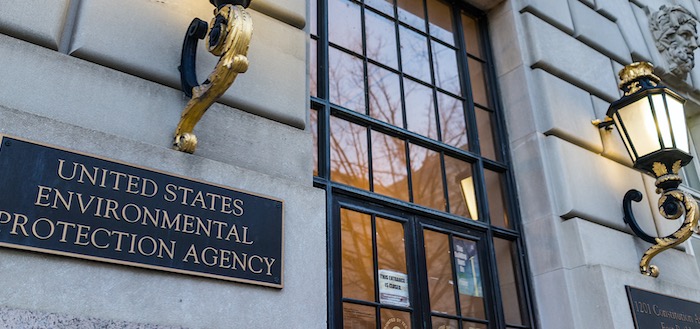
The U.S. Environmental Protection Agency’s cleanup efforts in the asbestos-riddled town of Libby, Montana are winding down for the calendar year and the organization is looking ahead to 2008 and beginning to make decisions on how money will be spent when January arrives.

According to a story aired on Montana’s CBS affiliates, the EPA has reached out to the citizens of Libby during the last few weeks, asking them to help set budget priorities for the coming year. They believe that community input is of the utmost importance, an EPA spokesperson pointed out.

As of the end of this week, Environmental Protection Agency workers will have removed asbestos from 160 homes and properties this year alone and expect that cleanup efforts will reach at least that same number next year.

Also next year, cleanup will extend to the neighboring town of Troy, Montana. The EPA began inspecting properties in that town earlier this year and determined that cleanup efforts were indeed necessary. The news report indicates that those inspections will continue next year but actual asbestos removal projects will begin in at least half a dozen places.

The town of Libby represents the worst case of industrial pollution in the nation. Thousands of residents have been sickened by asbestos diseases and hundreds have already died as a result of contamination from a local vermiculite mine owned and operated by the W.R. Grace Company. Currently, the company and several of its executives are facing charges in federal court for knowingly exposing its workers to dangerous asbestos.

Former Sailor Wins $35 Million Asbestos Suit

Thursday, October 25th, 2007

A former U.S. Navy sailor who was exposed to asbestos more than 50 years ago has won $35 million in a suit against two companies that manufactured the products that caused him to develop mesothelioma.

According to an article in Forbes, John R. “Jack” Davis, claimed his illness “was triggered by exposure to asbestos-containing pipes and valves” during his Navy and private-sector career. Davis had been a boiler tender with the Navy and was diagnosed with malignant pleural mesothelioma in January of this year.

The Superior Court case took five weeks to complete but the jury took less than an hour to pronounce a guilty verdict against Florida-based Leslie Controls, a division of Circor International, and Massachusetts-based Warren Pumps. The companies, who were responsible for supplying asbestos-containing material to the Navy during Davis’ tenure, must each pay 7.1 percent of the damages. The remainder of the money, the article states, will come from several entities, including the United States Navy.

The verdict includes $100,000 for economic damages; $25 million for Davis’ pain and suffering; and $10 million for Davis’ wife.

Warren Pumps claims they did not make the insulation to which Davis was exposed and representatives for Leslie Controls refused to comment on the outcome of the case.

EPA Finishes Cleanup Near Nashua River

Thursday, October 25th, 2007

The federal Environmental Protection Agency (EPA) has just completed the cleanup of tons of asbestos-contaminated soil near the Nashua River and the city library in the town of Nashua, New Hampshire.

According to an article in the Nashua Telegraph, approximately 95 tons of contaminated dirt was dug up over the past three weeks at the site between the river and library. The dirt was taken to the Nashua landfill and, according to an EPA representative, the area was then covered with a special type of cloth and at least six inches of soil, which the city will reseed in coming weeks.

The asbestos was found at the site and in other parts of Nashua and nearby Hudson because of the former presence of a Johns Manville factory. The Johns Manville plant used asbestos to make fireproof building materials at this location for more than seven decades.

The article also notes that “the company made leftover asbestos available to those who wanted clean fill for construction projects, and over the years, asbestos filler was placed under numerous buildings, roads, parks and parking lots.”

The EPA instigated the cleanup after they determined that some of the asbestos near the library could easily become airborne, largely due to erosion and mowing in the area. Airborne asbestos could, in turn, be inhaled by those who frequent the area.

The work, estimated to cost about $140,000, was done under the EPA’s Emergency Response Program in New England.

The article points out that “the south side of the Nashua River has long been known to be contaminated. The city dealt with asbestos along the riverbank when it built a walkway next to the library a decade ago.”

Some believe the filler may have been placed back in the area when several houses were torn down and Park Street was relocated in the late 1960s, leading to the construction of the current library.

Asbestos Fears Loom in Face of Hotel Implosion

Monday, October 22nd, 2007

Neighbors of the old Sands Hotel and Casino in Atlantic City, NJ are trying to block the impending implosion of the three-decade-old hotel, noting that the resulting dust and debris will most likely contain dangerous asbestos particles.

According to an Associated Press article, Vincent Barth – the owner of the Park Lane Apartment Hotel, located across the street from The Sands – went to court on Wednesday to try to block the implosion, which is scheduled to take place on Thursday morning, October 18. No action was taken at the time but a hearing was scheduled for the morning of the implosion.

“We know for a fact that the Sands building contained asbestos, the worst kind of asbestos,” said Barth’s lawyer, Clifford Van Syoc. “We know it contained lead, PCBs and other toxic chemicals.

“We’ve been asking over and over for the last 30 days for proof that they’ve taken it out, but for some reason, they won’t give it to us.”

According to the article, The Sands is being demolished to make way for a $1.5 billion to $2 billion new mega-casino to be built by Pinnacle Entertainment. The facility, which does not have a name at this time, is scheduled to open in late 2011 or early 2012.

Kim Townsend, president of Pinnacle Atlantic City, reassured the city that all toxic materials have been removed from The Sands, which was one of Atlantic City’s earliest casinos.

“I think what people need to understand is that companies cannot get permits for demolition without the environmental work being tested, remediated and retested,” she told the media. “You can’t get one without the other.”

Townsend acknowledges that dust will be a problem immediately after the implosion, but doesn’t see it as a big deal.

“Dust is an unpreventable byproduct of all types of demolition,” the company wrote on its Web site. “We do expect heavy dust in the block immediately surrounding the demolition site. Dust may also prevail outside and downwind of the area, depending on weather conditions.”

EPA Finishes Clean Up of NJ Superfund Site

Monday, October 22nd, 2007

The U.S. Environmental Protection Agency reports that they have completed the removal of asbestos and other hazardous materials from a Trenton-area (New Jersey) superfund site that has plagued the area for more than a decade.

The EPA “has completed a removal action at an abandoned automotive brake pad manufacturing facility located on the border of Lawrence Township and Trenton in Mercer County, NJ,” notes a press release from the agency.

The site was once the home of Friction Division Products, Inc. The company moved out about 10 years ago and left the property strewn with dangerous materials, including asbestos, elemental sulfur, acids, flammable solids, waste oil, solvents, and metallic compounds. EPA cleaned up more than 800 drums and containers during the past 10 months, including dozens of drums of unknown materials.

A process such as this, adds the EPA, includes taking an inventory of all chemicals found, sampling them, and then categorizing them for proper disposal. Among the materials found at the Friction site were 70 tons of asbestos-containing materials, a result of the grinding of brake pads.

“EPA stepped in on this site and we have completed the cleanup work that we pledged to do,” said Alan J. Steinberg, Regional Administrator. “We identified the most critical actions that needed to be done and completed them in a timely manner so that the two towns involved are better safeguarded.”

From the early 1960s until 1996, two companies – most recently Friction – manufactured brake shoes and pads at the site. Friction moved across the river to Pennsylvania and left behind an environmental mess. After years of trying to convince Friction to clean up the area, New Jersey officials asked the EPA for help last year. Work on the site commenced in January 2007.

Montana Senator Thrilled about Potential Asbestos Ban

Wednesday, October 17th, 2007

According to an article in the Western News, Max Baucus, the senior senator from Montana, is delighted that the Senate has taken the first step towards the total ban of asbestos, a dangerous mineral that has caused horrendous devastation and heartbreak in his state.

“Asbestos has wrought havoc in Montana and across the country,” said Baucus, who is the co-sponsor of the ‘Ban Asbestos in America Act’ along with Senator Patty Murray of Washington. “Getting rid of asbestos and stopping the devastation it causes is a very personal fight for me. I’m proud to help pass the legislation that will end the use of asbestos once and for all.”

In particular, Baucus cites the case of Libby, Montana, where literally thousands have been sickened by the long-time presence of a vermiculite mine, owned by W.R. Grace and Company. Hundreds have died since the mine closed in 1990. People in Libby develop asbestos-related health problems at a rate of 40 to 60 times the national average, and they suffer from mesothelioma, a dangerous and aggressive form of cancer caused by asbestos exposure, at a rate of about 100 times the national average. Libby was declared a national “superfund” site in 2002.

“I don’t want folks in other parts of the country to go through what the folks of Libby have – it’s awful and never should happen again,” Baucus said. “This legislation will help prevent asbestos tragedies from happening in the future. It’s a good, common-sense bill.”

Baucus hopes the House will take up the cause and pass the bill as well.